Trusted lab scientific supplies form the backbone of every successful laboratory. Whether for teaching, research, or industrial testing, dependable consumables and durable equipment ensure experiments run smoothly and results remain reproducible. A well-stocked lab includes reagents, safety gear, measurement devices, filtration media, and storage solutions. Quality control of supplies reduces variability, improves safety, and supports regulatory compliance across academic and commercial settings.
Essential Types of Laboratory Glassware
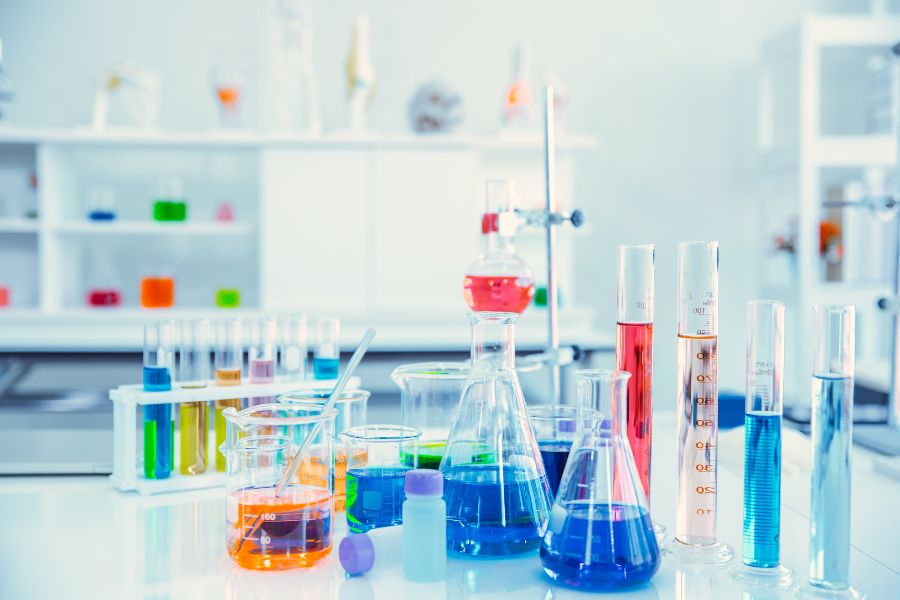
Understanding the types of laboratory glassware is fundamental for selecting the right tool for each procedure. Glassware is valued for its chemical resistance, thermal stability, and clarity. Common categories include volumetric glassware, which offers high accuracy for preparing standard solutions and calibration; reaction vessels such as beakers and flasks that provide versatile containers for mixing and heating; and specialized apparatus for titration, distillation, and chromatography.


Volumetric Glassware
Volumetric instruments like volumetric flasks, pipettes, and burettes are designed for precise measurement. Volumetric flasks are essential for preparing exact solution concentrations, while pipettes and burettes enable accurate transfer and titration. Using calibrated volumetric glassware minimizes concentration errors in quantitative analysis.
Reaction and Containment Glassware
Beakers, Erlenmeyer flasks, round-bottom flasks, and watch glasses serve as primary reaction and containment vessels. Beakers are ideal for general mixing and heating, whereas Erlenmeyer flasks reduce splashing during stirring. Round-bottom flasks are preferred for uniform heating in reflux and distillation setups. Choosing the right shape and size improves safety and efficiency.
Specialized Glassware for Separation and Analysis
Distillation columns, separatory funnels, chromatography columns, and condensers are indispensable for separation and purification workflows. These items facilitate phase separation, solvent recovery, and component isolation in both preparative and analytical contexts. Proper selection and maintenance ensure peak performance and longevity.
Measurement and Observation Glassware
Graduated cylinders, test tubes, watch glasses, and culture tubes are used for routine measurements and observations. Graduated cylinders provide quick volume estimates, while test tubes are convenient for small-scale reactions and assays. Optical clarity and scratch-free surfaces aid in accurate observation and photometric measurements.
Safety, Cleaning, and Maintenance
Safe handling and proper maintenance of glassware are essential. Inspect items for chips and cracks before use, and follow established cleaning protocols to remove residues. Use appropriate drying and storage techniques to prevent contamination and reduce the risk of breakage. PPE such as gloves and eye protection must be standard when handling chemicals and hot glassware.
Integration of Supplies and Glassware
Pairing reliable lab scientific supplies with the correct types of laboratory glassware creates an efficient, safe, and dependable workspace. From education laboratories teaching basic techniques to industrial labs performing complex analyses, the right combination of consumables, instruments, and glassware enhances reproducibility, safety, and workflow efficiency.
Selecting certified materials, keeping an inventory system, and training staff on correct usage further maximizes return on investment while minimizing lab downtime and accidental contamination. Periodic calibration and supplier verification maintain confidence in everyday measurements and experimental outcomes, and documentation practices regularly.
Conclusion:
Trusted lab scientific supplies combined with the correct types of laboratory glassware guarantee reproducible results, improved safety, and streamlined workflows. Prioritize calibrated instruments, routine maintenance, proper storage, and staff training to minimize errors and contamination. These practices uphold quality, regulatory compliance, and long-term laboratory efficiency across educational and industrial environments.